Sharing money as a couple: three fair models
Split 50/50, in proportion to income, or the same spending money for both? Three ways to share costs as a couple, worked out in euros, without taking sides.
Two people, two accounts, two cards. One paid the rent, the other paid for groceries, and the electricity bill left somebody’s card. Each of you knows roughly what you paid. Neither of you knows what we paid.
That’s nobody’s fault, and it doesn’t mean something is wrong with the relationship. Johanna Sassali, a couples therapist at the Finnish family federation Väestöliitto, told Yle that money comes up in nearly every contact with their services, and that for about a third of couples finances are a significant problem. The most common reason isn’t that one partner overspends. The most common reason is that neither sees the whole picture.
This post walks through three ways to split shared costs, each worked out in euros. Not because one of them is the right one, but because fair is easier to choose when you can see what it means.
What’s shared and what’s personal?
Before anything gets split, agree on what gets split. Martat, the Finnish home economics organisation, lists the typical shared costs: rent or maintenance charge, food, electricity and internet, insurance, children’s costs, shared holiday savings. Then there are personal costs: hobbies, clothes, your own phone plans, that one subscription the other person couldn’t care less about.
The line is yours to draw. But one principle repeats in almost every expert view, and consumer researcher Anu Raijas said it to Yle plainly: everyone needs some money of their own. Money you don’t have to account for to anyone. That’s not distrust; it’s how both of you stay adults.
This post uses one made-up example, sized against Statistics Finland consumption figures: housing about €1,000 a month, food €400, transport €450, for a total of €1,850 in shared costs. And two people, Mila and Otto: Mila takes home €3,200 a month, Otto €2,400. The numbers are invented; your numbers are yours.
Model 1: 50/50
The simplest model. Shared costs are split down the middle: €925 each.
After that, Mila has €2,275 a month for herself, Otto €1,475. The gap is €800 a month.
Splitting 50/50 works well when incomes are close: it’s clear, and nobody has to calculate anything. When incomes clearly differ, it starts to chafe quietly. Not necessarily right away, but at some point. In a survey by the Finnish bank OP, about a third of respondents considered an even split the fairest option; about 60 percent disagreed.
Model 2: in proportion to income
In this model each partner pays the same share of their income. Mila and Otto’s combined take-home income is €5,600, of which Mila’s share is 57 percent and Otto’s 43.
Of the shared €1,850, Mila pays about €1,055 and Otto about €795. That leaves Mila €2,145 and Otto €1,605 for themselves. The gap shrank from €800 to €540.
This is the model a majority of OP’s survey respondents considered fairest, and Takuusäätiö, a Finnish foundation focused on financial wellbeing, recommends it when incomes differ. It requires one calculation, and it requires both of you to tell the other what you earn. In a YouGov survey for Danske Bank, 94 percent of people in a relationship said they know their partner’s finances well, so for most couples that’s not the obstacle.
Model 3: the same spending money for both
The third model is the one people talk about least, and it flips the question around. Instead of asking “how much does each of us pay”, it asks “how much does each of us keep”.
Combined income €5,600, shared costs €1,850. That leaves €3,750, and it gets split evenly: €1,875 each for personal spending. Who paid which bill becomes a bookkeeping question in this model, not a fairness question.
This is effectively what happens in a fully pooled household, but you can do it with separate accounts too: agree that after the bills, both of you have the same amount to spend. It suits couples especially when the income gap is large, or when one of you is out of work for a while; in those situations a proportional split can leave one person with very little.
And notice what happened in this model: the whole conversation moved from bills to how much each of you has safe to spend. In the end, that’s the number daily life runs on.
Fair isn’t the same as equal.
Joint account, separate accounts, or both?
None of the three models forces any particular account setup. But since the question always comes up, here’s what’s known.
In a study published in 2023, US researchers Olson, Rick, Small and Finkel followed newlywed couples for two years. Couples randomly assigned to open a joint account maintained relationship quality better than those who kept accounts separate. The researchers’ explanation wasn’t the money but the visibility: a joint account forced couples to manage finances together and talk about goals.
But the study’s summary carries two caveats worth reading: partial pooling didn’t produce the same benefit, and a joint account can be a risk in a relationship with imbalance or control issues. The recurring advice from Finnish banks is practical: a joint account for shared costs, plus an account of your own for each of you.
We don’t take a side here. What the research actually says is more interesting than the account setup: the benefit came from both partners seeing the same whole and talking about the same goals. You can get that without pooling every euro.
When should the deal be updated?
A split that was fair in 2024 isn’t necessarily fair any more. In a reader survey by the Finnish magazine Eeva, nearly one in four respondents felt the financial cost of parental leave hadn’t been shared fairly. It’s a good reminder that the deal should be reopened whenever someone’s income changes.
A short list of moments when the split is worth recalculating:
- one of you starts parental leave or studies
- one of you loses a job or goes part-time
- one of you gets a clear raise
- you move, and housing costs change
- a child is born or moves out
No need to make it a big thing. It’s enough that either of you is allowed to say “hey, should we run the numbers again”.
Cohabiting? A joint account doesn’t make property joint
This isn’t a cost-splitting question, but it belongs here because many people don’t know it. According to Statistics Finland, about one in four Finnish families is a cohabiting couple. And as the Finnish Consumers’ Union explains, in cohabitation each partner owns their own property: a joint account doesn’t change that, and a cohabiting partner doesn’t inherit without a will. In marriage the situation is different.
In Danske Bank’s survey, 53 percent of couples with shared savings hadn’t agreed what happens to them if they separate. That’s worth knowing, and worth talking about while everything is fine.
How to see the whole without pooling everything
If one thing sticks from this post, let it be this: shared finances aren’t an account question. They’re a visibility question. When both of you see the same bills, the same income and the same rest-of-month, agreeing on a split model is one calm conversation, not a running negotiation.
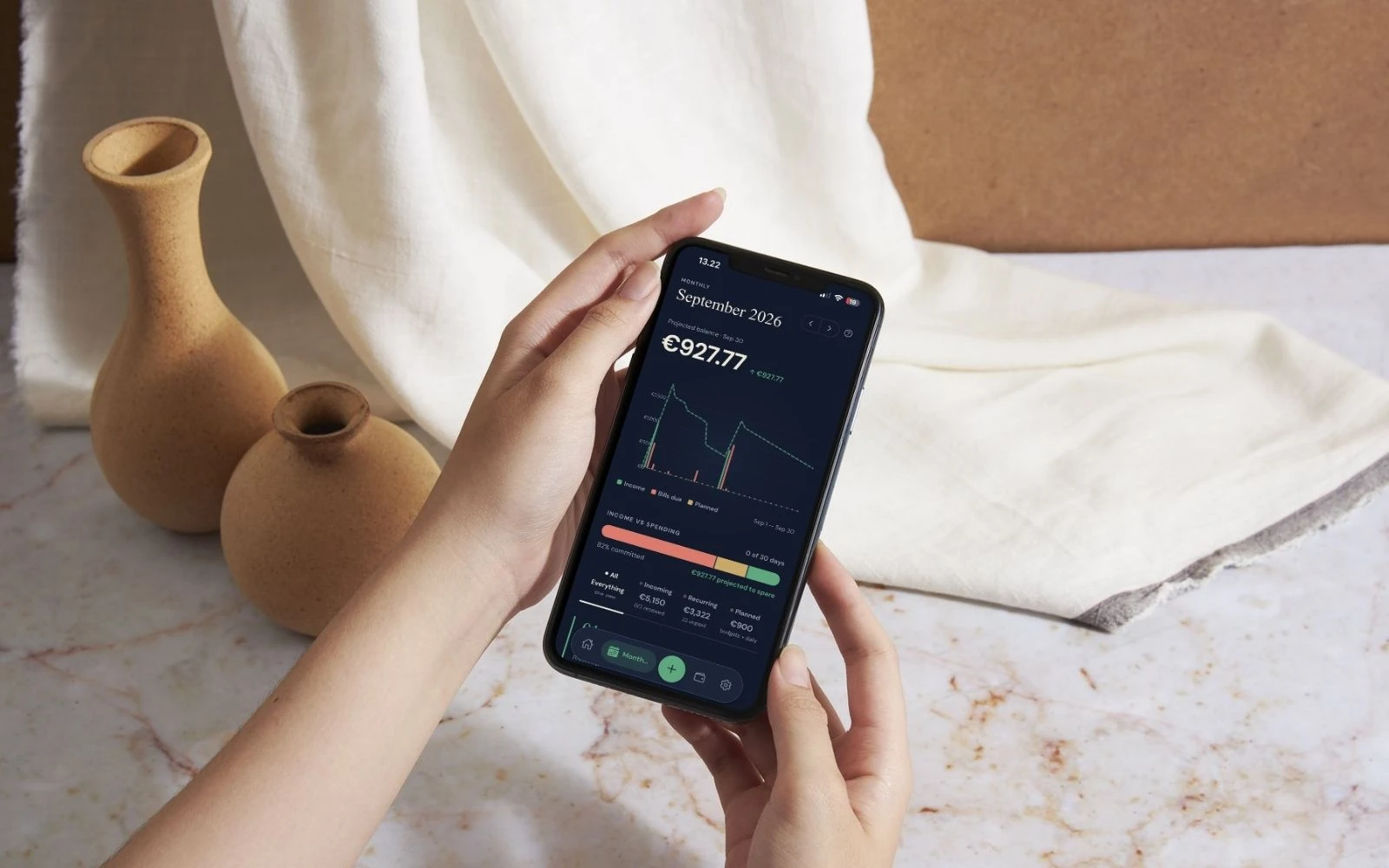
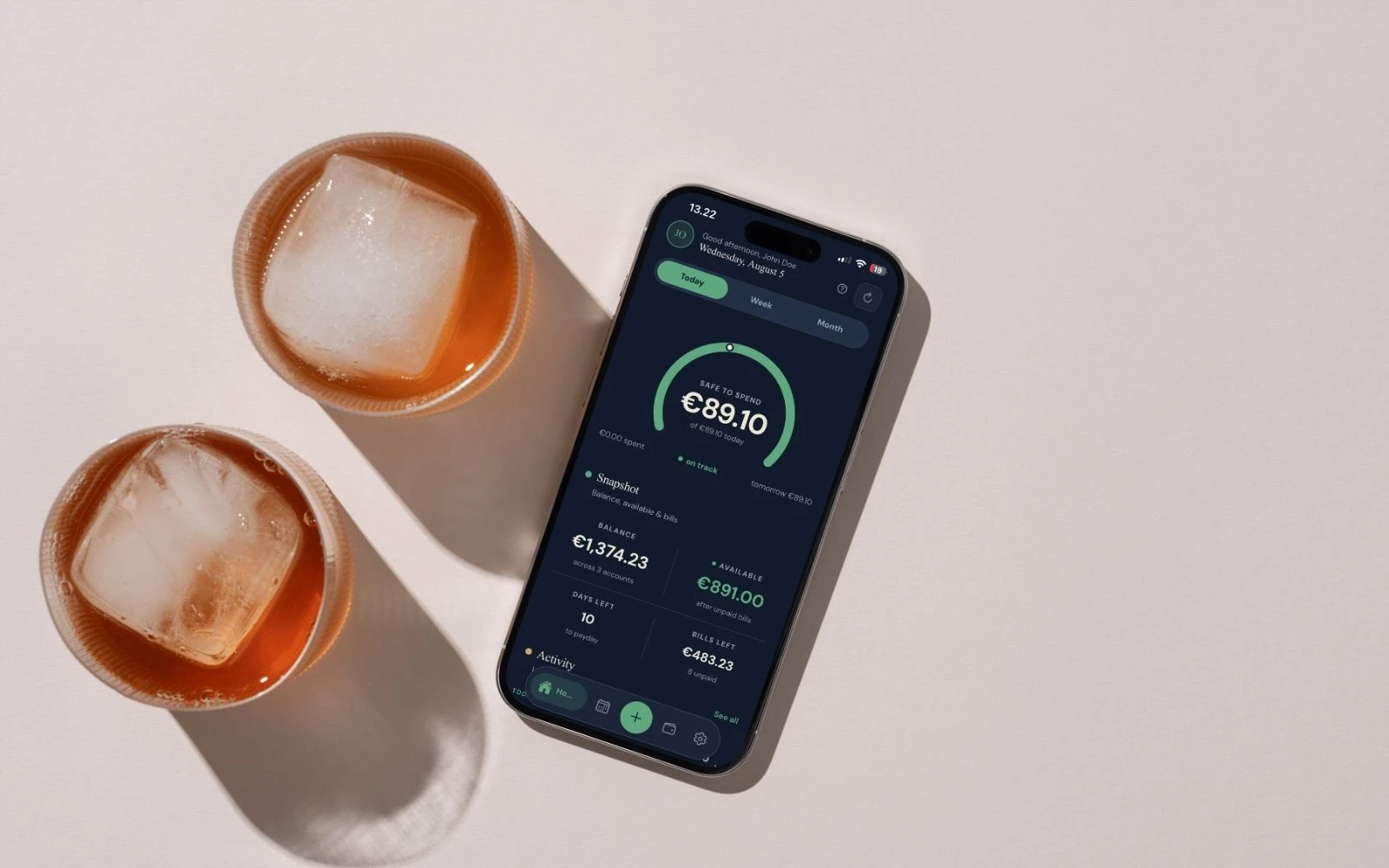
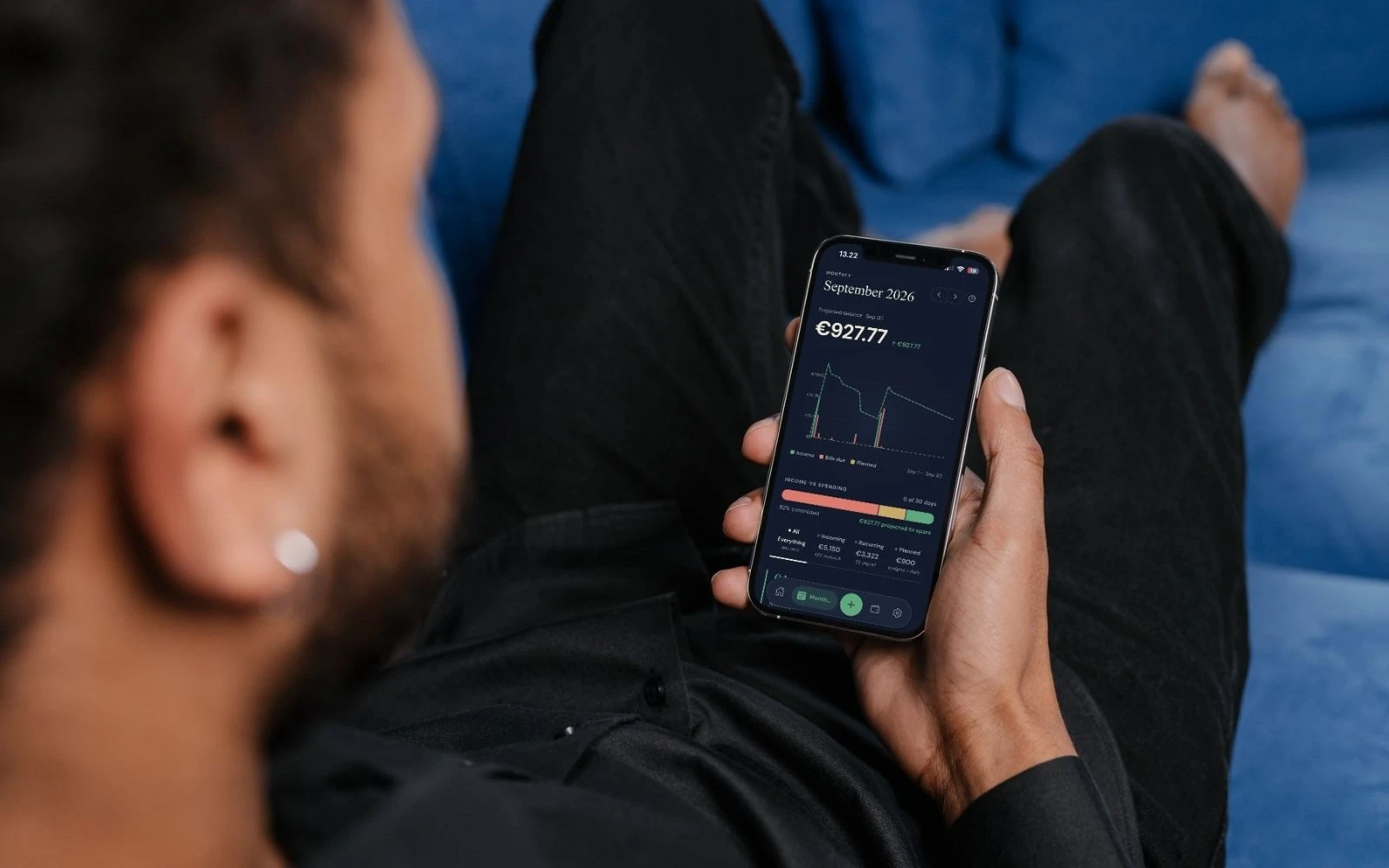
You can build that visibility on paper, in a spreadsheet, or in an app. In Prsperous it’s built in: a shared pot for shared costs and each partner’s own safe-to-spend number, a holding account for the big yearly bills, and settle up for when one of you paid for something on behalf of both. No joint bank account, no bank credentials. More about the features, and the FAQ answers whether it works for couples.
We believe every couple can get clarity in their finances. Not because either of you is good with numbers, but because seeing the whole doesn’t require that from either of you. It only requires that the whole is somewhere you both can see it.
Stay on track. Reach your goals.
Prsperous gives you tools and clarity, not financial advice.