Where does your money go? Three places you don't see
Money doesn't vanish. It goes where you can't see it: contactless payments, forgotten subscriptions, the end of the month. Here's how to make it visible.
There was money in the account. Then there wasn’t. And when you try to remember where it went, nothing big comes to mind. No new sofa, no flights, nothing you could point to and say “that was it”.
If that sounds familiar, you are not bad with money. Money doesn’t actually vanish. It goes to places you can’t see, and invisible money is not the same thing as badly spent money. This post covers the three places money most often disappears into, and how to bring it back into view. No discipline lectures, no shame.
Why money feels like it disappears
Let’s start with the part that isn’t your fault.
When you pay with cash, you hand something over. You see the note leave. When you pay by card, and especially by contactless, you hand nothing over: you hold your phone near a reader for a second and walk out. Researchers call this the pain of paying, and it has been measured. Prelec and Simester found back in 2001 that people are willing to pay more for the same thing by card than with cash. A more recent Dutch study from 2024 sums up the same point: contactless hurts the least, and helps the least at keeping spending in check.
And we pay for almost everything by contactless. According to the Bank of Finland, over 60 percent of card payments in Finland are contactless, and in a survey by Finance Finland only six percent of Finns mainly use cash for everyday purchases.
The card isn’t the villain. The card is quiet. And quiet money is invisible money.
Money doesn’t vanish. It turns invisible.
Place 1: small repeat purchases
No, this is not the part where you are told to stop buying coffee. Coffee is good. Buy the coffee.
The point is different: small purchases feel like nothing individually, so they never make it into the mental picture you carry of your own spending. Lunch, a snack, a bus ticket, something from the kiosk. Each one is “well, that was five euros”.
Takuusäätiö, a Finnish foundation that helps people manage their finances, has a simple exercise for this: pick one small repeat purchase, multiply its price by how many times a month you make it, and look at the number. Not so you’d stop, but so you’d know.
A made-up example: a four-euro snack four days a week is roughly 70 euros a month. That might be a perfectly good deal. But it’s only a good deal once it’s a conscious choice instead of a surprise.
Place 2: subscriptions you no longer use
This is the part where almost everyone finds something.
According to a survey published in summer 2026, nearly half of Finns pay for subscription services they don’t actively use. One in five spends €5–10 a month on unused subscriptions, and about a third pays at least €50 a month for subscriptions in total. (The survey was commissioned by a fintech company, so treat the numbers as directional. The direction is clear enough.)
Prices have crept up at the same time. Yle compared the prices of ten streaming services between 2021 and 2024, and almost every one had become more expensive. The subscription you signed up for as “a fiver” may not be a fiver any more.
Subscriptions slip out of view because they charge automatically and each one is small on its own. The good news: cancelling has become easier. The Finnish Competition and Consumer Authority notes that from 19 June 2026 online stores must offer a clear cancellation function, and the consumer ombudsman’s long-standing position is that ending a subscription must be as easy as starting one.
A practical tip: open your online bank, scroll through the last month of transactions, and pick out every line that repeats. Write them down. The list is usually longer than you guessed, and that’s fine too. At least now it’s visible.
Place 3: the end of the month
The third place isn’t a purchase. It’s a point in time.
At the start of the month the salary is in and everything feels possible. Then the bills go out, food gets bought, life gets lived, and somewhere around the 20th you notice the rest of the month is going to be tight. Not because you splurged, but because nobody told you on the 5th how much was actually available.
One number from Statistics Finland helps here: about 59 percent of Finnish households’ spending goes on necessities like housing, transport and food. Housing alone takes roughly a third. For lower-income households the shares are even larger.
Which means the money that feels like it “disappears” is, in practice, the remaining 40 percent. And that’s the part almost nobody plans at the level of days. People know their bills. But how much is left per day for the rest of the month after the bills? That number is missing for most of us.
Where does our money go?
If you share a household with someone, everything above doubles, and gets one extra layer on top.
Two cards, two accounts, two online banks. One of you paid for groceries, the other for electricity, someone paid for that one subscription neither of you remembers any more. Each of you sees your own half and neither sees the whole. Then money doesn’t just slip out of view. It disappears into the gap between two people.
You don’t need a joint account or long money talks to fix this. You need one place where you both see the same month. More on that in its own post.
How to make your money visible again
We believe absolutely anyone can get a grip on their finances. Not because they’re especially good with numbers, but because visibility doesn’t require talent. It requires three steps.
1. Log it. To start with, anything works: paper, a notes app, a spreadsheet. Martat, the Finnish home economics organisation, recommends going through your receipts and online bank daily or weekly. Not forever. A few weeks is enough to learn where your money actually goes (rather than where you assume it goes).
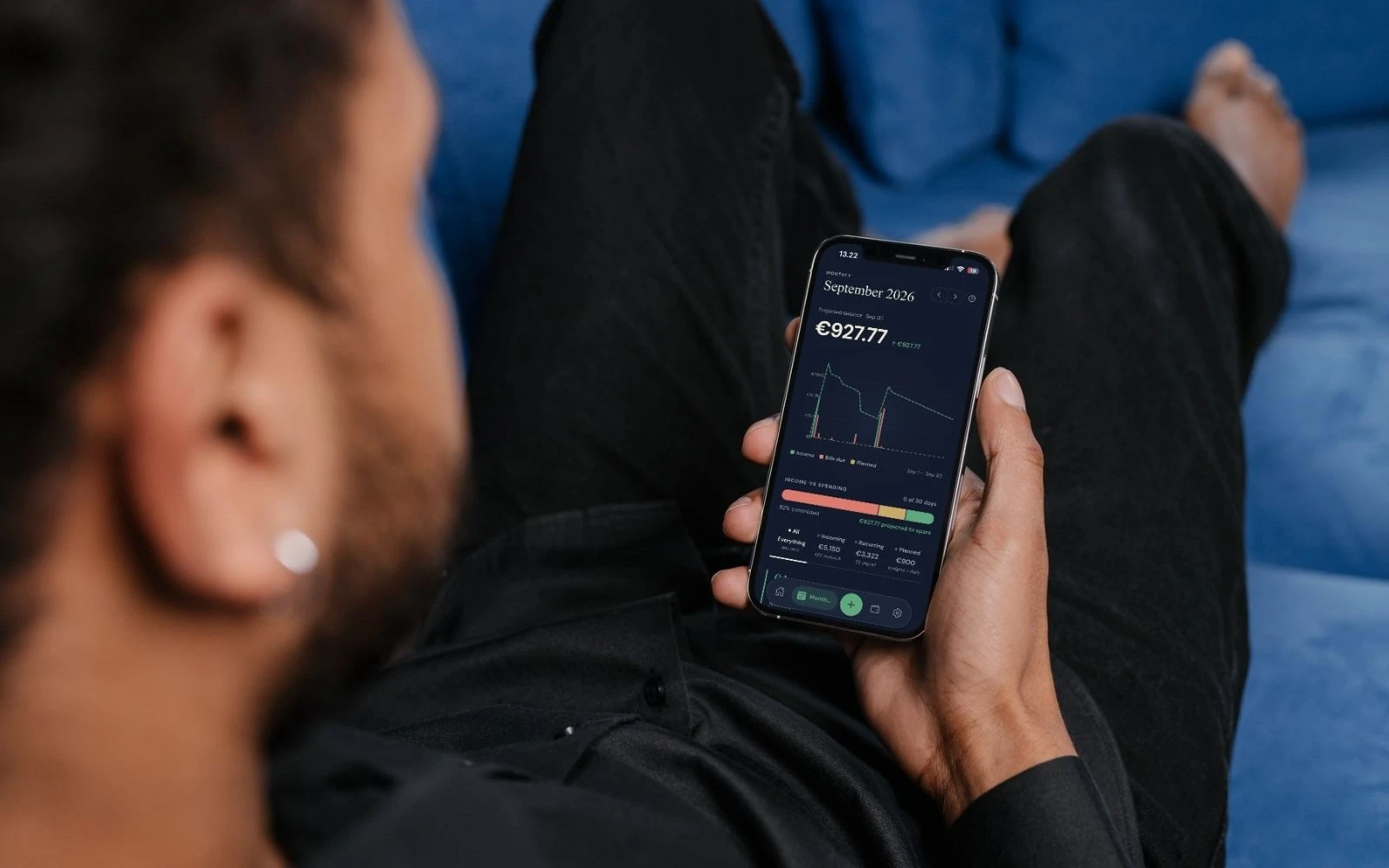
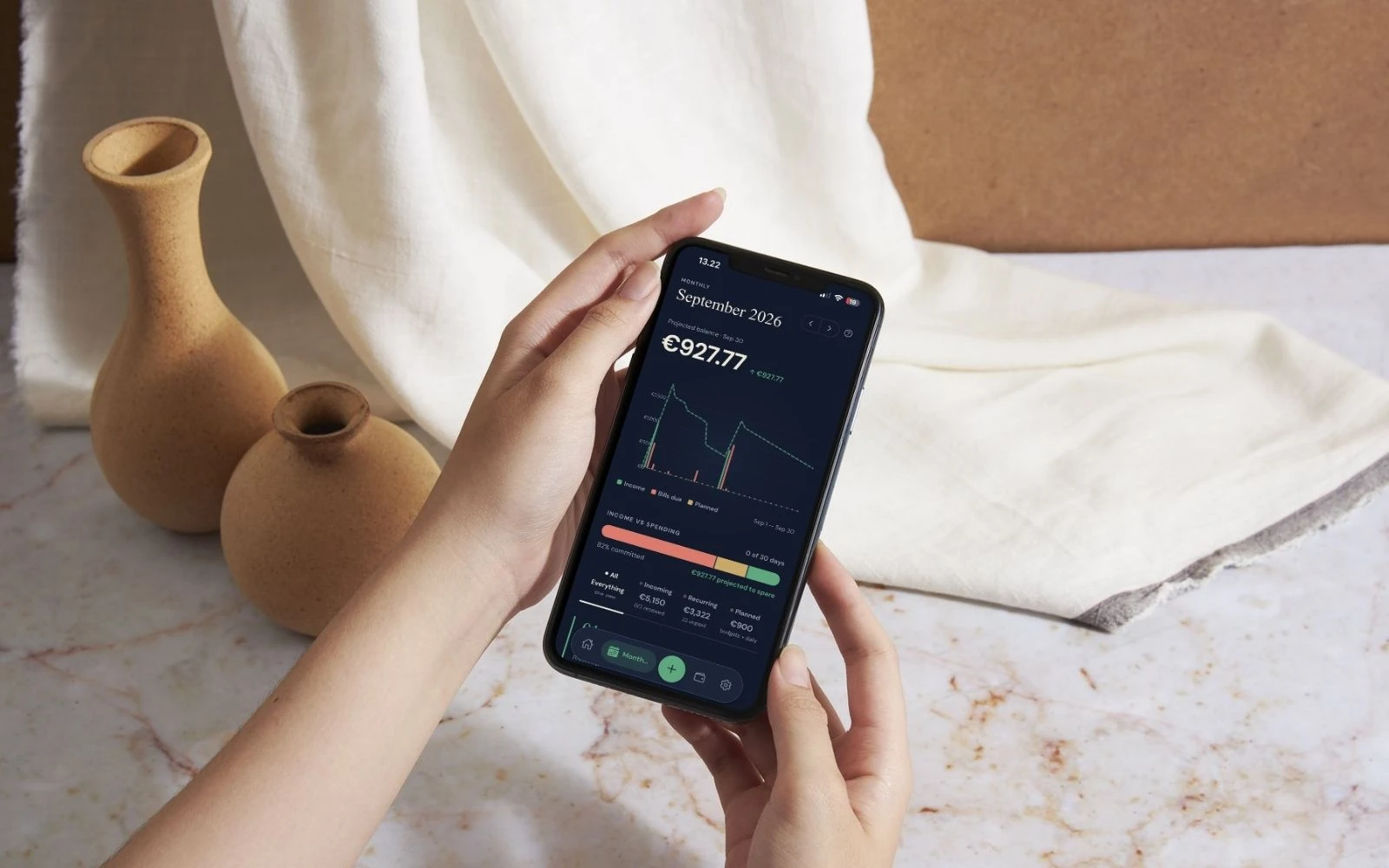
2. See the whole month before it happens. Write down your income and bills and when they arrive and leave. Once the month is on paper in advance, the end of it stops being a surprise. There’s a walkthrough in our monthly budget guide.
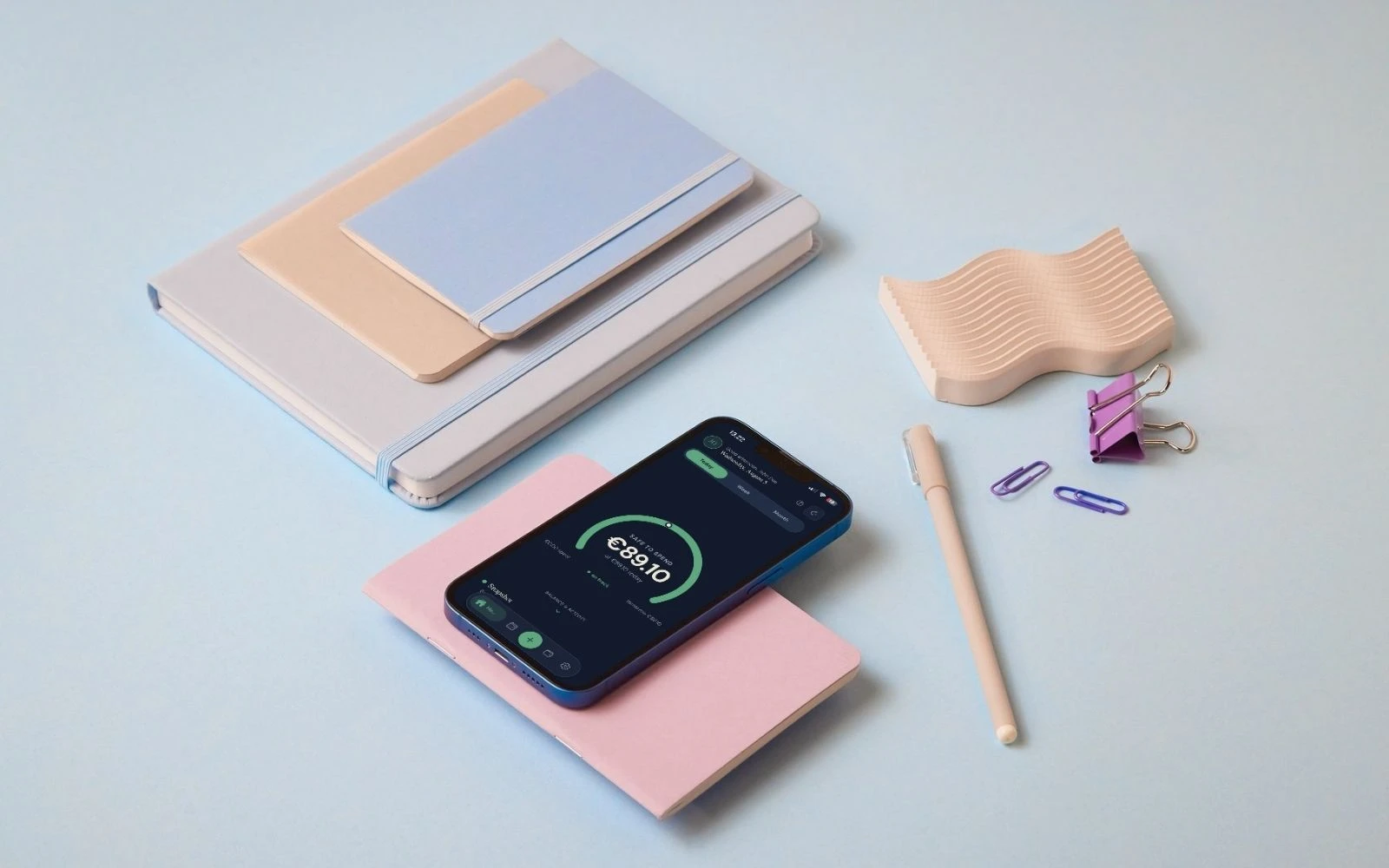
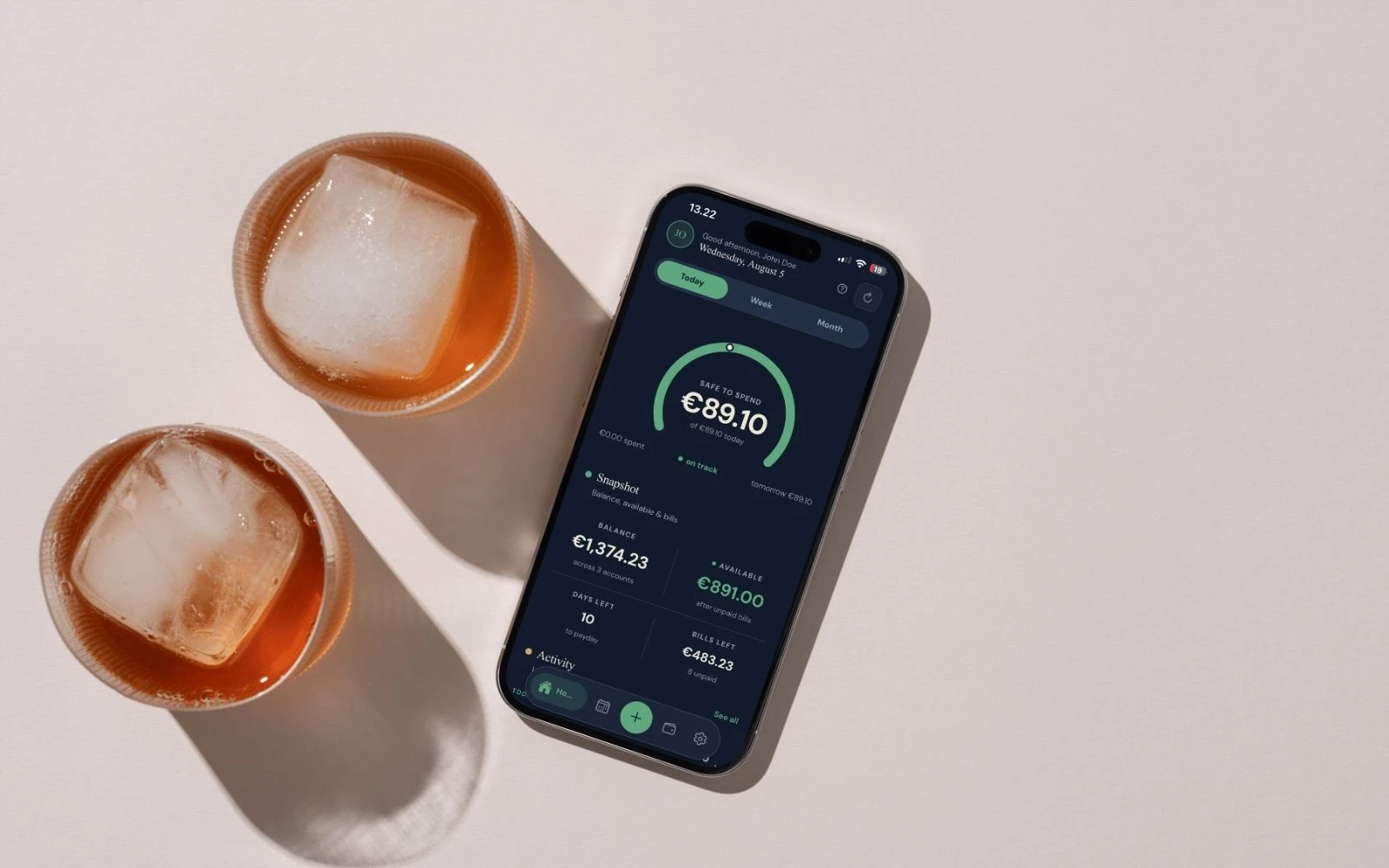
3. Know what’s safe to spend today. This is the number most people are missing. Once the bills are accounted for and the remaining days counted, you’re left with one amount per day, and that’s an easy number to live with. Prsperous is built around exactly this number: you enter your income and bills, and the app shows every day how much is safe to spend, solo or shared, with no bank connection. Here’s how it works.
Your money never disappeared. It was just in the dark. Turn the lights on.
Know what’s safe to spend — every day.
Prsperous gives you tools and clarity, not financial advice.