How much is actually left each month? Ages 18–44
What people in Finland actually have left each month at 18–24, 25–34 and 35–44: median incomes, living costs, and a realistic daily budget, fully sourced.
“How much do other people actually have left?”
It’s the question a lot of people wonder about and almost nobody asks out loud. The internet is full of net-salary calculators and individual spending diaries, but rarely the thing you actually want to know: what someone my age earns, where it goes, and how much is left to spend freely, per month and per day.
This post works it out for three age groups in Finland: 18–24, 25–34 and 35–44. The figures come from Statistics Finland, the Finnish Taxpayers Association, Kela and the Centre for Consumer Society Research, and every source is linked. One thing up front: these are medians and examples, not instructions. Your numbers are yours, and that’s exactly why this post ends with three steps for calculating your own.
This is the first part of a two-part series. Part two runs the same numbers for a two-adult household.
The starting point: median salary by age
According to Statistics Finland’s structure of earnings statistics, the median full-time salary in 2024 was about €3,600 a month. Age matters a lot:
| Age | Median, gross €/mo | Bottom tenth | Top tenth |
|---|---|---|---|
| 20–24 | 2,738 | 2,054 | 3,758 |
| 25–29 | 3,183 | 2,346 | 4,520 |
| 30–34 | 3,471 | 2,473 | 5,249 |
| 35–39 | 3,668 | 2,538 | 5,920 |
| 40–44 | 3,865 | 2,602 | 6,435 |
Total earnings, full-time employees, 2024. Source: Statistics Finland.
Two caveats. First: this is the salary of full-time employees. Students, part-timers and the unemployed aren’t included, and especially at 18–24 that’s a large share of the age group. Second: median means half earn less. If your salary is below the table, you’re in the same company as about half of your age group.
A more honest picture of everyone in an age group comes from the income distribution statistics, which measure disposable income: after taxes, benefits included, for everyone, not only wage earners. In 2024 the median was about €1,100 a month at 18–24, about €2,270 at 25–34 and about €2,770 at 35–49.
From gross to net
Tax, pension contributions and unemployment insurance come off the top. Based on the Taxpayers Association’s 2026 tables, the total deduction at an average municipal tax rate is about 21 percent of a €2,800 monthly salary, about 26.5 percent of €3,500 and about 29 percent of €4,000. (A little less if you’re not a church member or live in a low-tax municipality.)
Roughly, then:
- median salary at 20–24, €2,738 → about €2,150/mo net
- median salary at 25–34, about €3,350 → about €2,500/mo net
- median salary at 35–44, about €3,770 → about €2,700/mo net
From here on, only net numbers. They’re the only ones that matter at the checkout.
What living alone costs
There are two good sources for the cost side, and they measure different things.
The reference budgets from the Centre for Consumer Society Research (updated November 2025) describe a decent minimum: what life costs for an adult under 45 living alone, when nothing is luxurious but nothing is missing either. Excluding housing and transport it comes to about €610–680 a month: food €256–312, clothes about €55, hygiene €40–52, health €22–30, connectivity and home electronics €93, leisure €48, household goods about €55, electricity and insurance €38. With housing included, the University of Helsinki puts the total at €1,251–1,761 a month depending on where you live.
Statistics Finland’s consumption survey, on the other hand, shows what people actually spend. Under-25s spent less than €19,000 a year per consumption unit in 2022, and spending grows with age. At 25–34, food took about €3,500 a year, roughly €290 a month, close to the reference budget’s minimum.
And then the thing that decides everything: housing. According to Statistics Finland, the median rent for a market-rate studio in summer 2026 was €730 in Helsinki, €600 in Tampere, €530 in Oulu and €528 in Jyväskylä. The same person on the same salary lives €200 a month more loosely in Oulu than in Helsinki. Age shows here too: 83 percent of young households rent, against 36 percent of 30–59-year-olds.
18–24: two very different months
There isn’t one typical budget in this age group. There are two.
The student. Kela’s study grant for someone living independently is €279.38 a month in 2026, topped up by housing allowance and possibly a student loan. According to the latest large national student survey, a student’s median income including work and benefits was about €1,000 a month, and spending roughly matched it: about €500 on housing, about €250 on food.
An illustrative month: income €1,000, rent €500, phone and internet €40, public transport €40. Fixed costs €580, leaving €420, which is about €14 a day for food and everything else. That’s tight, and it’s tight by design: a student budget is built for getting by, not for comfort.
The first full-time job. The median salary at 20–24 is about €2,150 net. An illustrative month in Tampere: studio €600, electricity and insurance €40, phone, internet and subscriptions €60, public transport €50, and €200 to savings (an example figure, not a recommendation). Fixed costs €950, leaving €1,200, about €40 a day.
The gap is nearly threefold, and it explains why the first salary feels like wealth, and why so many people notice six months later that the wealth is nowhere to be seen. €40 a day for the rest of the month is easy to spend without ever deciding to.
25–34: the decade when everything changes
Median salary in this group climbs from about €3,200 to €3,500, which nets out around €2,500. At the same time, Statistics Finland’s family statistics show about 30 percent of 25–34-year-olds living alone and just over half in a relationship, so many people cross over to a two-adult household during this decade.
An illustrative solo month in Helsinki: studio €730, electricity and insurance €40, phone, internet and subscriptions €60, an HSL AB monthly ticket at €73.90, €250 to savings (example figure). Fixed costs €1,154, leaving about €1,350, roughly €45 a day.
And here is maybe the most important comparison in this post. The reference budget’s decent minimum for daily costs, meaning food, clothes, hygiene, health, leisure and household goods, is about €500 a month for someone living alone, or about €17 a day. The gap between €45 and €17, about €28 a day, is the part of your life you actually decide about. It’s restaurants, hobbies, trips, clothes that aren’t necessities, or extra savings. Nobody calculates that number for you, and it’s exactly where money disappears if you can’t see it.
35–44: more income, more fixed costs
Median salary peaks in this group, about €2,700 net. But fixed costs often peak too: 64 percent of 35–44-year-olds are in a relationship, many own their home, and many run a car.
An illustrative solo month outside the capital region: a one-bedroom flat or mortgage payments €700, electricity and insurance €50, phone, internet and subscriptions €60, a car at the reference budget’s assumption of €530 a month all costs included, and €270 to savings (example figure). Fixed costs €1,610, leaving about €1,090, roughly €36 a day.
Notice what happened: net salary is about €550 higher than at 20–24, yet the amount left per day is lower than for the first-jobber in a Tampere studio. The car alone eats nearly €18 a day in this example. That isn’t wrong; it’s a choice, and for many a necessary one. But it’s worth seeing as a choice, not as background noise.
Your salary says what you earn. The daily amount left over says how you live.
So what’s a “realistic daily budget”?
A summary of the examples, all illustrative but sized to the statistics:
| Situation | Net €/mo | Fixed €/mo | Left €/day |
|---|---|---|---|
| Student, 18–24 | 1,000 | 580 | ~14 |
| First job, 20–24, Tampere | 2,150 | 950 | ~40 |
| Solo, 25–34, Helsinki | 2,500 | 1,154 | ~45 |
| Solo, 35–44, car, outside Helsinki | 2,700 | 1,610 | ~36 |
| Reference budget minimum, daily costs | — | — | ~17 |
In the light of these numbers, a realistic daily budget for a working adult living alone in Finland sits somewhere between €35 and €45, of which €15–20 is what the decent minimum already requires. If your number is clearly smaller, the reason is usually housing or the car, not coffee. If it’s bigger, you have more room to choose than you think.
Neither is advice. What you save and what you spend on is your business. But the number is worth knowing, because according to Finance Finland, 39 percent of Finns don’t save at all, and many may not even know whether they could.
How to calculate yours
We believe absolutely anyone can do this, whatever their age or salary. Three steps:
- Net income. Check your payslip or Kela decision for what actually lands in your account. Not the gross.
- Fixed costs. Housing, electricity, insurance, phone, internet, subscriptions, loans, public transport or the car, plus the amount you want to move to savings. If you haven’t listed your subscriptions in a while, now’s the moment.
- Divide what’s left by the days. Net income minus fixed costs, divided by the days in the month. That’s your daily budget, the same formula Takuusäätiö, the Finnish financial-wellbeing foundation, recommends.
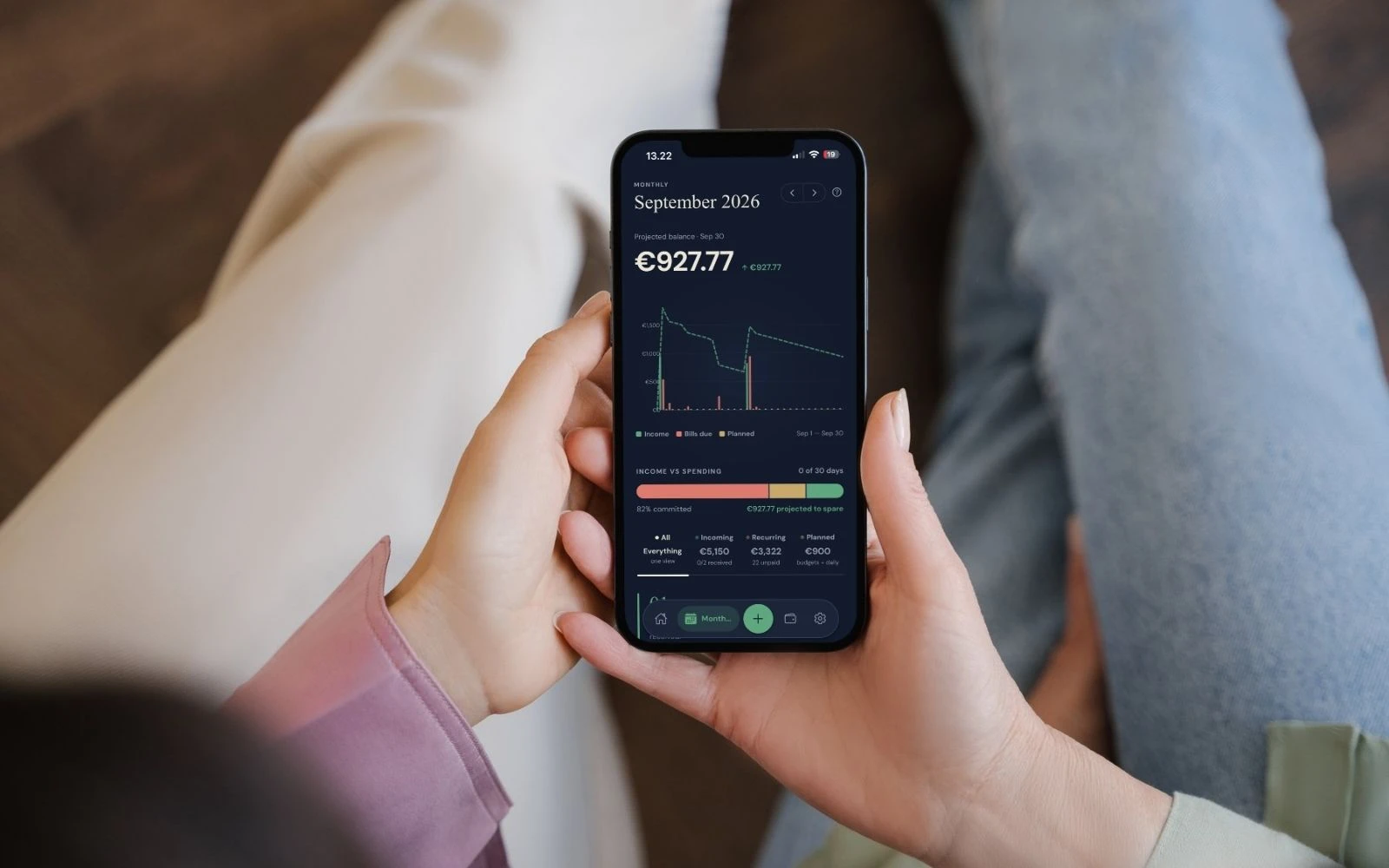
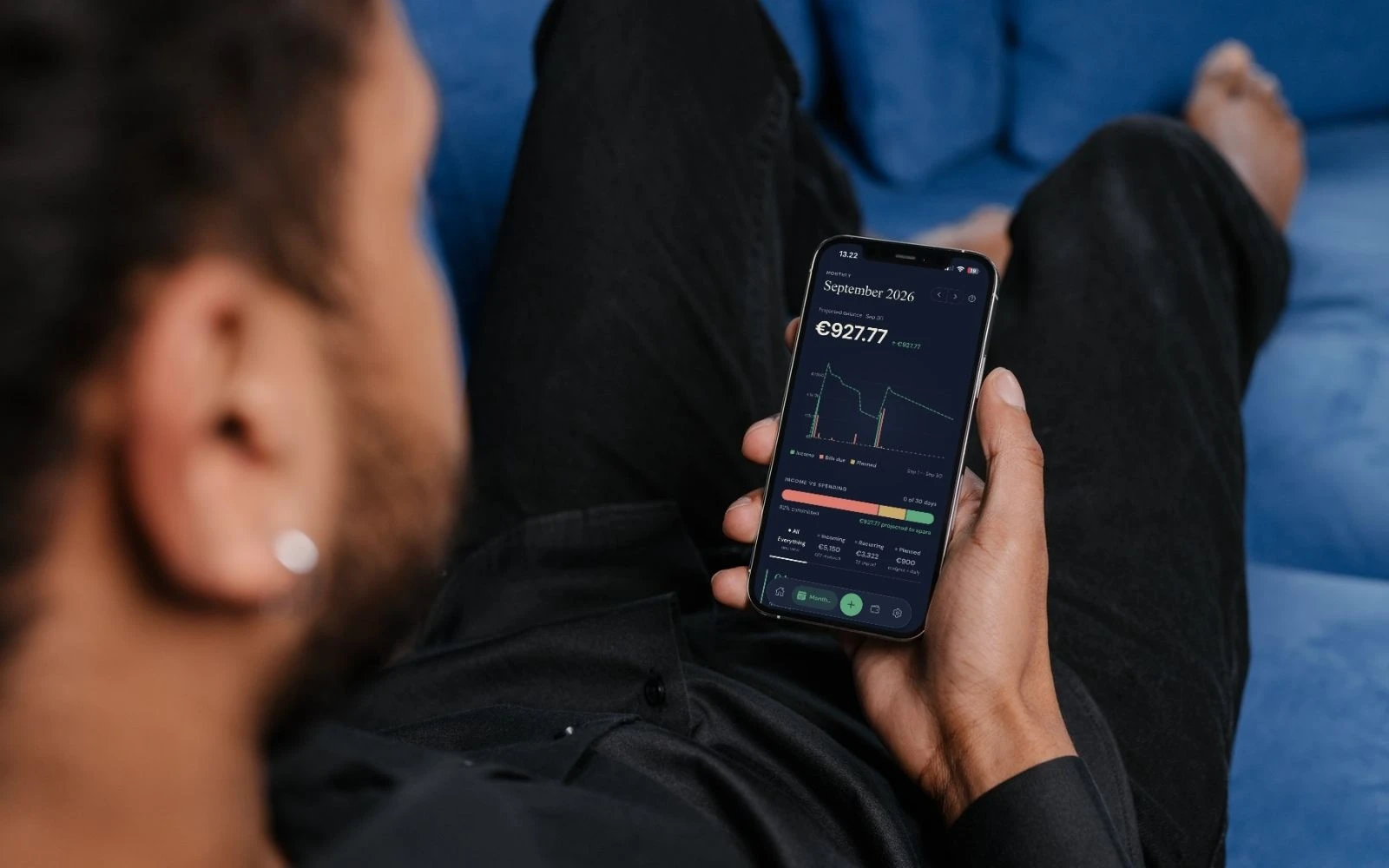
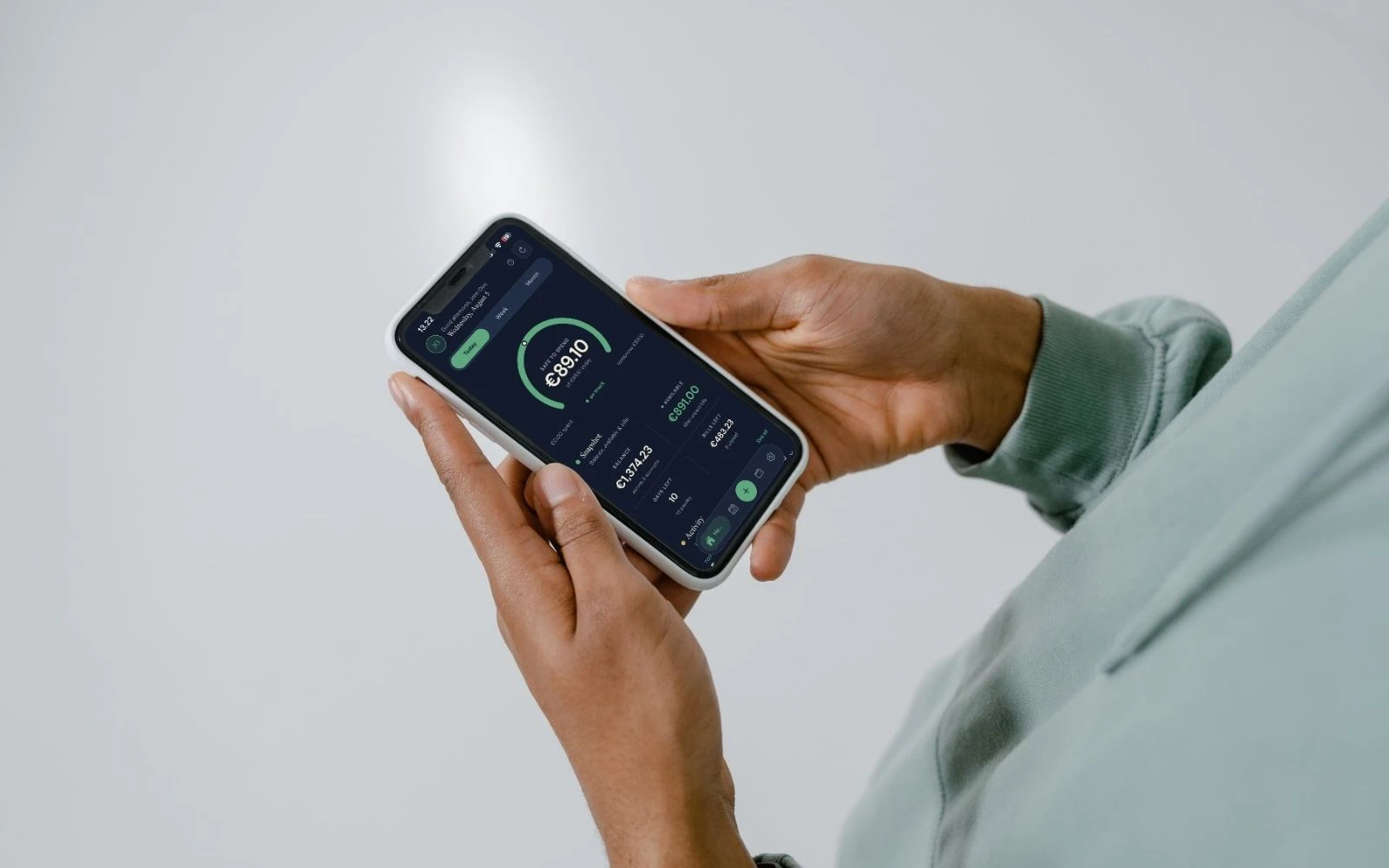
You can do this on paper once. Prsperous does it again every day: you enter your income and bills, log the day’s purchases, and the app shows how much is safe to spend tomorrow. No bank credentials. Here’s how it works.
And if yours is a two-person household, part two shows what these numbers look like for two.
Know what’s safe to spend — every day.
Prsperous gives you tools and clarity, not financial advice.